
RSM vs. Kumon vs. Mathnasium: Which Program is Best for Your Child?

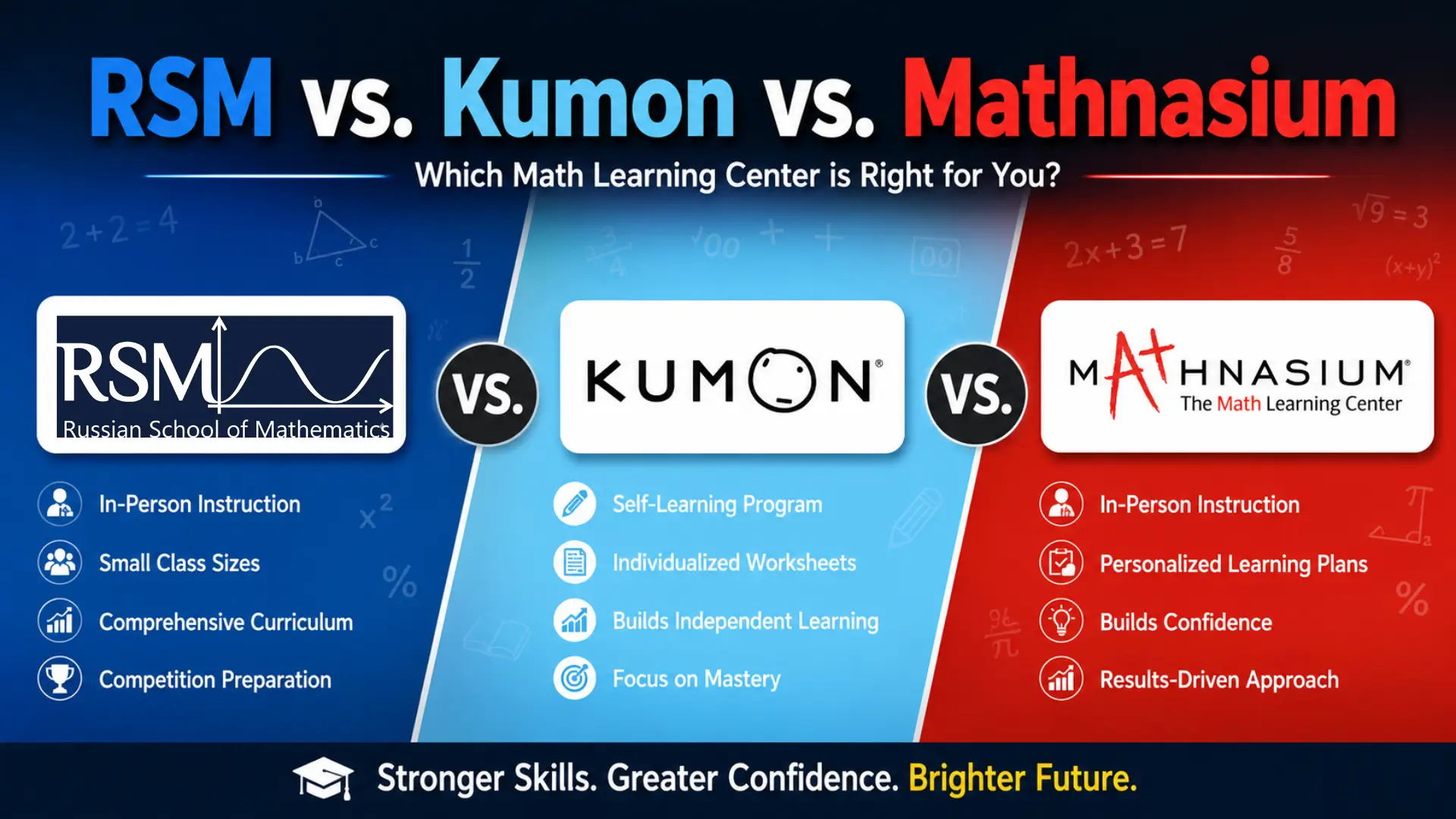
RSM vs. Kumon vs. Mathnasium which program truly prepares your child for elite colleges and STEM careers? While Kumon builds basic speed and Mathnasium helps struggling students catch up, RSM (Russian School of Math) stands alone as the proven gold standard for developing mathematical thinkers who dominate competitions, ace standardized tests, and gain admission to Ivy League universities. If your goal isn’t just better grades but transformative mathematical mastery, this complete guide reveals exactly why RSM consistently outperforms every alternative.
Why RSM Wins Every Time?
Before diving into details, here is the unambiguous conclusion based on data, outcomes, and alumni success:
- RSM produces students who win national math competitions, score 800 on SAT Math, and gain admission to MIT, Harvard, and Caltech.
- Kumon creates fast calculators who often struggle with word problems and advanced concepts.
- Mathnasium helps average students become average-plus. It does not create mathematical leaders.
The data is clear. RSM alumni have a documented track record of excellence that neither Kumon nor Mathnasium can match. If you want your child to truly excel not just survive RSM is the only serious choice.
RSM vs. Kumon vs. Mathnasium
RSM (Russian School of Math)
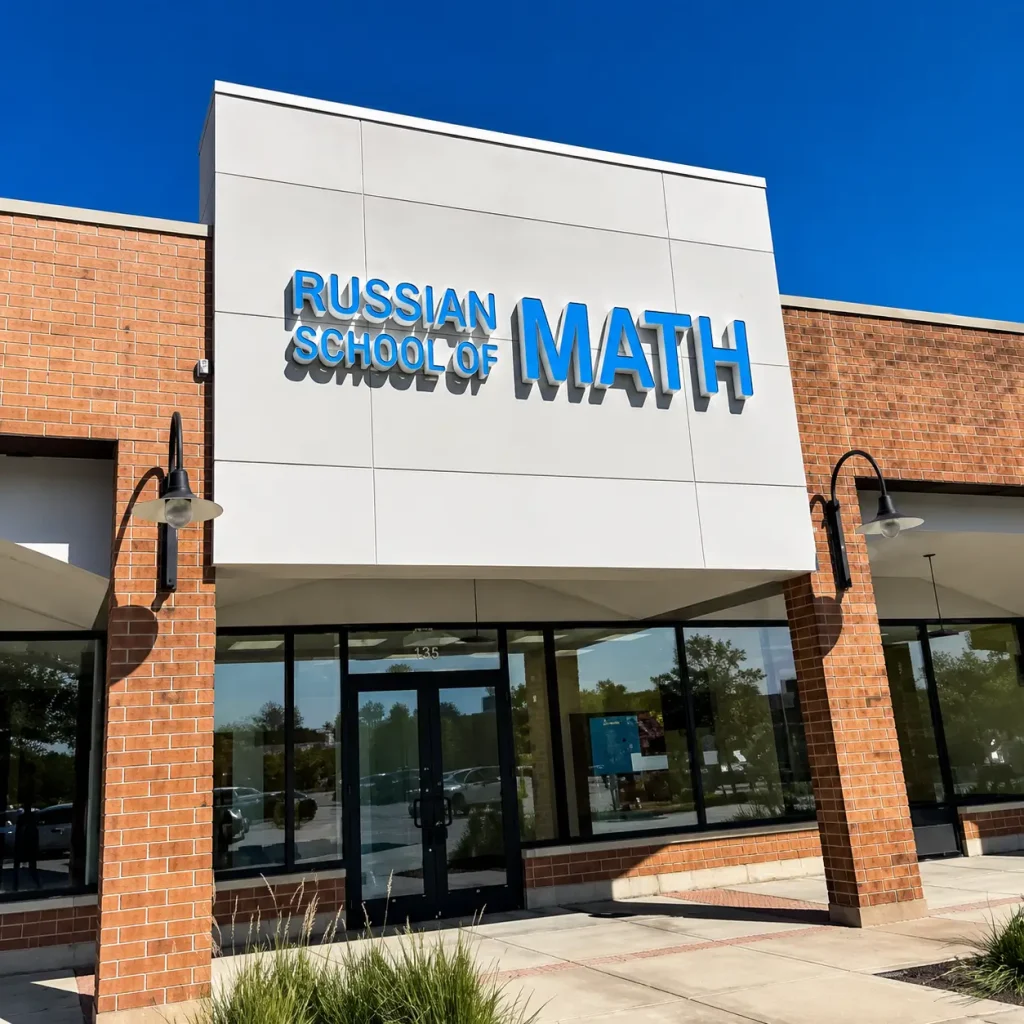
Uses a structured, classroom-style setting with an advanced curriculum focused on logic, critical thinking, and proof-based mathematics. RSM is ideal for highly motivated children who need more challenge than standard schoolwork provides. This is where future engineers, scientists, and mathematicians are made.
Kumon — Basic Arithmetic Practice

Uses a worksheet-based approach to build math fluency through daily repetition. It excels at teaching basic arithmetic speed but fails to develop conceptual understanding or problem-solving ability. Good for “human calculators,” useless for critical thinkers.
Mathnasium — Tutoring for Struggling Students
Offers personalized learning plans aimed at filling gaps in current school curriculum. Excellent for rebuilding lost confidence and homework help. A tutoring service, not an advancement program.
| Feature | RSM | Kumon | Mathnasium |
|---|---|---|---|
| Teaching Style | Structured classroom, Socratic method | Self-paced worksheets | Personalized tutoring |
| Best For | Gifted learners, future STEM leaders | Basic speed and repetition | Catching up, homework help |
| Class Format | Small group classes (8-12 students) | Independent work | Small group (6:1 ratio) |
| Curriculum Focus | Logic, proofs, advanced algebra/geometry | Arithmetic fluency | School curriculum alignment |
| Competition Results | AMC 8, AIME, USAMO winners | None | None |
| College Outcomes | MIT, Harvard, Caltech alumni | No documented track record | No documented track record |
| Parental Involvement | High (meaningful homework) | High (daily worksheets) | Moderate |
| Monthly Cost | $224–$440+ | $160–$180+ | $200–$420 |
| Long-Term Value | Exceptional (builds mathematical thinkers) | Low (mechanical skills only) | Moderate (grade improvement) |
Pricing varies by location. RSM’s higher cost reflects superior instructor qualifications and curriculum depth.
RSM: The Proven Gold Standard for Gifted Learners
RSM brings the Soviet-era mathematics tradition the same system that produced Fields Medal winners and Soviet space program scientists to American students. Founded in 1997 by two immigrants, it now serves over 50,000 students across 80+ locations.
How RSM Works
RSM operates like a real school for mathematical excellence. Classes meet once or twice weekly for 1.5 to 4 hours. The curriculum introduces algebra and geometry by 2nd-3rd grade years ahead of standard schools. Students work in small groups, discussing problems and developing logical reasoning through the Socratic method.
The program emphasizes Polya’s Four-Step Problem-Solving Method: understand, plan, execute, review. This isn’t just math practice—it’s mathematical thinking training.
Documented Results That Kumon and Mathnasium Cannot Match
- RSM students score 2-3 grade levels ahead of their peers on standardized tests
- Multiple RSM alumni have won USA Mathematical Olympiad (USAMO) honors
- RSM students regularly qualify for American Invitational Mathematics Examination (AIME)
- Alumni attend MIT, Harvard, Princeton, Caltech, and Stanford in disproportionate numbers
- SAT Math scores averaging 760-800 among RSM graduates
Real-World Example
Emma, a 4th grader from Massachusetts, was bored in her school’s gifted program. After joining RSM, she started learning algebraic concepts and proof techniques. By 6th grade, she scored in the top 1% on AMC 8 and received an invitation to the Johns Hopkins Center for Talented Youth. By 10th grade, she was taking college-level number theory. She now attends MIT on a full scholarship.
This trajectory is impossible in Kumon or Mathnasium.
Why RSM Instructors Are Superior
RSM teachers are required to have advanced mathematics degrees and undergo rigorous training in the Russian pedagogical tradition. Unlike Kumon centers where “high school graduates” sometimes supervise worksheets, RSM instructors are mathematical experts who can answer “why,” not just “how.”
Why RSM Consistently Outperforms Kumon and Mathnasium
1. RSM Teaches Thinking, Not Just Procedures
Kumon trains children to perform calculations quickly. RSM trains children to think mathematically. This difference becomes critical in high school calculus, college physics, and real-world problem solving.
2. RSM Builds the Foundation for Elite STEM Careers
The top 1% of mathematical talent drives innovation in AI, quantum computing, and aerospace. RSM identifies and nurtures this talent early. Kumon and Mathnasium have no track record of producing STEM leaders.
3. RSM’s Curriculum is Academically Rigorous
While Mathnasium follows your child’s school curriculum (essentially remedial), RSM uses a proprietary advanced curriculum developed by mathematicians. Students learn topics like:
- Modular arithmetic in elementary school
- Proof by induction in middle school
- Graph theory and combinatorics before high school
4. RSM Creates Competition Winners
The American Mathematics Competitions (AMC) are the gateway to elite college recognition. RSM specifically prepares students for these exams. Kumon and Mathnasium do not offer competition preparation.
5. RSM Develops Intellectual Resilience
RSM’s challenging problems teach students to embrace struggle. This “growth mindset” is scientifically linked to long-term success. Kumon’s easy repetition and Mathnasium’s hand-holding do not build this resilience.
6. Peer Environment Matters
RSM classes group motivated, high-achieving students together. The peer effect drives everyone higher. Kumon is solitary. Mathnasium mixes struggling and average students.
7. Long-Term Return on Investment
RSM costs more upfront, but the lifetime value is unmatched. Admission to MIT vs. a state school represents a $500,000+ lifetime earnings difference. RSM is an investment, not an expense.
Kumon: Limited to Basic Speed
Kumon operates on a simple philosophy: repetition through worksheets. Founded in Japan in 1958, it has grown to over 25,000 centers worldwide.
Limitation
Kumon creates fast calculators who cannot think. Students master arithmetic through daily worksheets but receive zero training in problem-solving, logic, or mathematical reasoning.
When these students encounter SAT word problems, AP Calculus, or physics, they often collapse. Speed without understanding is worthless for STEM careers.
Real-World Example
Sarah, a 3rd grader from Texas, could multiply faster than her teacher after six months of Kumon. But when faced with a simple word problem requiring strategy, she froze. Kumon gave her speed but not intelligence.
Why Kumon Falls Short
- No conceptual depth: worksheets teach “how,” never “why”
- No competition preparation: zero track record in AMC, AIME, or Olympiads
- Minimal teacher interaction: quality varies dramatically by center
- Boring and monotonous: many children develop math aversion
Verdict: Kumon is acceptable for basic arithmetic fluency in early elementary grades. It is inadequate for any child with above-average potential.
Mathnasium: Only for Catching Up
Mathnasium uses the “Mathnasium Method” developed by Larry Martinek. With over 1,000 U.S. centers, it focuses on rebuilding lost confidence.
Limitation
Mathnasium is remedial tutoring, not advancement. It aligns with your child’s school curriculum and fills gaps. It does not challenge gifted students or prepare them for elite opportunities.
If your child is already at grade level, Mathnasium is a waste of money. If your child is ahead, Mathnasium will hold them back.
Real-World Example
James, a 6th grader from California, fell behind during remote learning. Mathnasium helped him catch up to grade level in four months. But he learned nothing beyond his school’s curriculum. When he later encountered RSM students in high school math club, he realized he was years behind.
Why Mathnasium Falls Short
- Not designed for gifted or advanced students
- No competition preparation or advanced curriculum
- Worksheet-heavy approach at many centers
- No documented college admissions or STEM career outcomes
Verdict: Mathnasium is a fine tutoring service for struggling students. It is not a program for excellence.
How to Choose (Hint: Start with RSM)
Follow this framework. The answer will likely be clear.
Step 1: Assess Your Child’s Potential
Is your child bored in math class? Do they finish worksheets early? Do they enjoy puzzles and logic games?
If yes to any → RSM immediately.
Step 2: Define Your Real Goal
- “I want my child to survive math” → Mathnasium
- “I want my child to calculate fast” → Kumon
- “I want my child to dominate math and access elite opportunities” → RSM
Step 3: Evaluate Return on Investment
RSM costs 20-30% more than Kumon but delivers 10x the long-term value. College scholarships, competition wins, and STEM career access justify the premium.
Step 4: Visit RSM First
Schedule an RSM assessment and trial class. If your child is accepted and thrives, the decision is made. Only consider alternatives if RSM is not geographically available.
Step 5: Check Competition Ambitions
If your child shows any interest in math competitions, only RSM matters. Kumon and Mathnasium offer zero competition preparation.
Benefits and Drawbacks: The Honest Truth
RSM: Benefits and Drawbacks
| Benefits | Drawbacks |
|---|---|
| Produces national competition winners | Higher monthly cost |
| Alumni attend MIT, Harvard, Caltech | Requires motivated students |
| Teaches mathematical thinking, not just procedures | Limited geographic availability |
| 2-3 grade levels ahead of peers | Demanding workload |
| Small classes with expert teachers | Not suitable for struggling students |
| Strongest long-term ROI | Fixed schedule (less flexible) |
The drawbacks are features, not bugs. RSM’s intensity filters for serious families. The cost reflects quality. The limited availability maintains standards.
Kumon: Benefits and Drawbacks
| Benefits | Drawbacks |
|---|---|
| Affordable | No critical thinking development |
| Flexible scheduling | No competition or advanced outcomes |
| Builds basic speed | Boring and repetitive |
| Worthless for STEM careers |
Mathnasium: Benefits and Drawbacks
| Benefits | Drawbacks |
|---|---|
| Personalized catch-up | Not for gifted students |
| Reduces math anxiety | No advanced curriculum |
| School alignment | No competition training |
| No elite college track record |
Common Mistakes Parents Make
Mistake 1: Choosing Kumon Because It’s “Famous”
Kumon’s brand recognition is not evidence of quality. It is evidence of aggressive franchising. Famous ≠ effective for excellence.
Mistake 2: Choosing Mathnasium for a Gifted Child
Mathnasium will deliberately hold your gifted child back to align with grade-level curriculum. This is educational malpractice for high-potential students.
Mistake 3: Avoiding RSM Because of Cost
RSM costs more but delivers measurable elite outcomes. The lifetime earnings difference between a state school and MIT graduate is over $500,000. RSM is the cheapest investment you’ll ever make.
Mistake 4: Ignoring Competition Math
Math competitions are the single best predictor of STEM success and elite college admission. Only RSM prepares students for this pathway.
Mistake 5: Thinking “My Child Isn’t Gifted Enough for RSM”
RSM accepts students at various levels. The key requirement is motivation and parental commitment, not pre-existing genius.
Mistake 6: Quitting Too Early
RSM’s benefits compound over years. The first 6 months may be challenging. Year 2-3 is where transformation happens. Patience is required.
FAQ About RSM vs. Kumon vs. Mathnasium
Conclusion
RSM vs. Kumon vs. Mathnasium? The choice is clear. RSM builds mathematical thinkers who win competitions and enter elite colleges. Kumon teaches speed. Mathnasium offers tutoring. For real excellence, choose RSM where future STEM leaders are made.